

RedVDS Takedown: What the Fingerprint-Based Attribution Reveals About Infrastructure Security
Microsoft's January 2026 disruption of RedVDS infrastructure hinged on a single cloned hostname. This analysis examines the attribution methodology and what organizations and security teams can learn from it.
Background
On January 14, 2026, Microsoft Security Blog published details of a coordinated takedown targeting
RedVDS, a virtual desktop service allegedly used for cybercriminal operations. The attribution relied on
a single artifact: every VM provisioned by RedVDS shared the hostname WIN-BUNS25TD77J.
This case is a clear example of infrastructure fingerprinting—a technique used by both defenders and attackers:
- Defenders fingerprint attackers — Microsoft correlated 7,300+ IPs to one provider using a shared hostname
- Attackers fingerprint targets — Threat actors use the same approach to identify and profile potential victims
This analysis uses the RedVDS takedown to illustrate how fingerprinting works—and why it matters for both security teams and the organizations they protect.
How Microsoft Attributed the Infrastructure
When attackers reuse infrastructure components, they create correlation opportunities for defenders. In this case, a single cloned hostname exposed an entire operation.
The Fingerprint That Exposed Everything
According to Microsoft's report, the RedVDS operator cloned a single Windows Server 2022 image to provision customer VMs. This operational shortcut preserved identical artifacts across all instances:
- Hostname —
WIN-BUNS25TD77Jembedded in RDP certificates - Machine SID — Identical across all cloned instances
- RDP certificate fingerprint — Same certificate presented during TLS handshakes
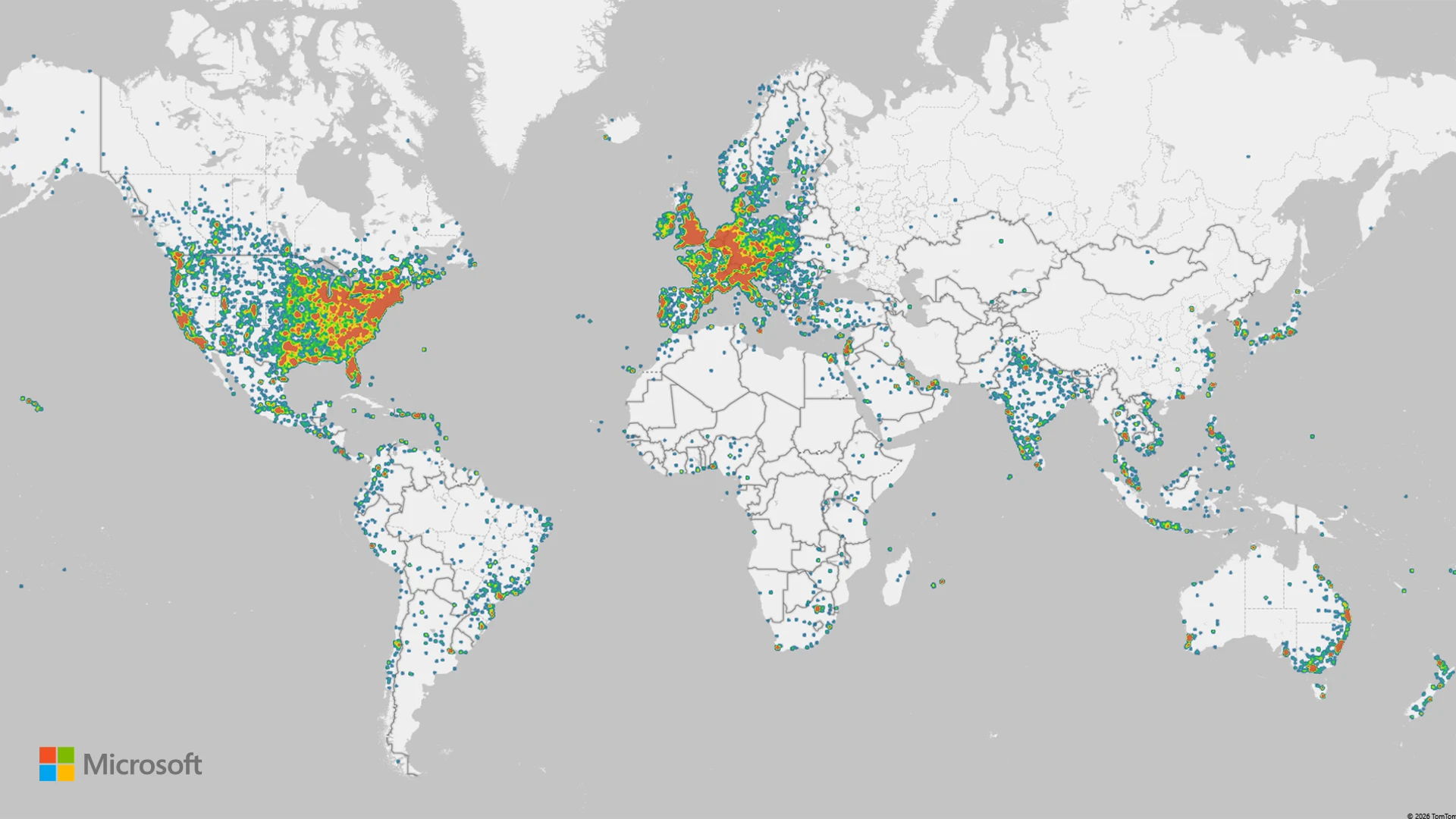
Hostname WIN-BUNS25TD77J appeared in RDP certificate subjects across 7,300+ IPs. What
looked like thousands of independent attacks could be correlated to a single infrastructure
provider.
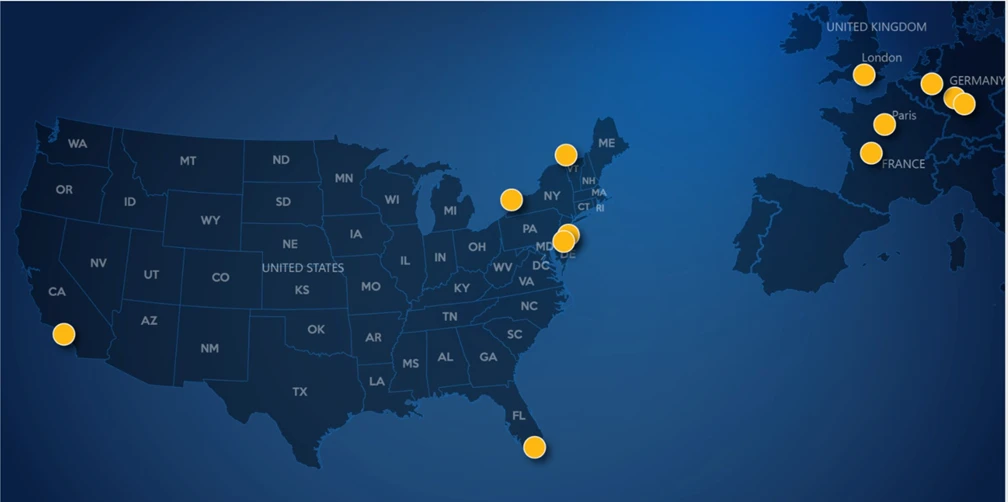
[ Geographic distribution of attributed activity ]
Where the Fingerprint Appeared
Microsoft found the fingerprint across multiple data sources:
- RDP connection metadata — Hostname in certificate subjects during TLS handshake
- Windows event logs — Workstation name in authentication events (Event ID 4624/4625)
- Network telemetry — Certificate fingerprints in encrypted traffic metadata
- Endpoint telemetry — Microsoft Defender data from compromised systems
[ Infrastructure distribution ]
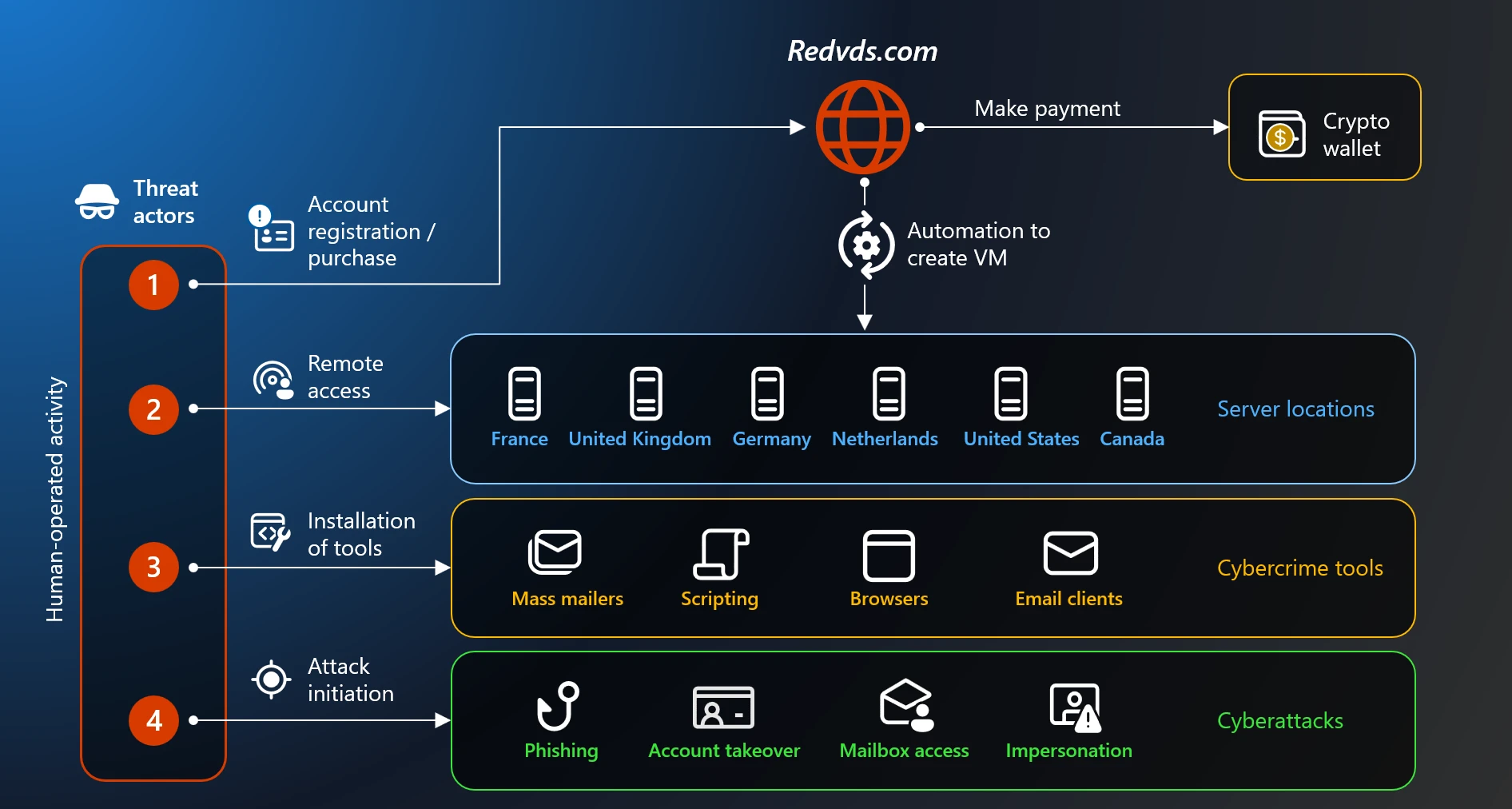
This case shows why pivoting on machine identifiers matters. When you find a hostname, certificate fingerprint, or JA3 hash appearing across multiple source IPs, you may be looking at coordinated infrastructure—not independent attacks.
Reported Scale and Attack Chain
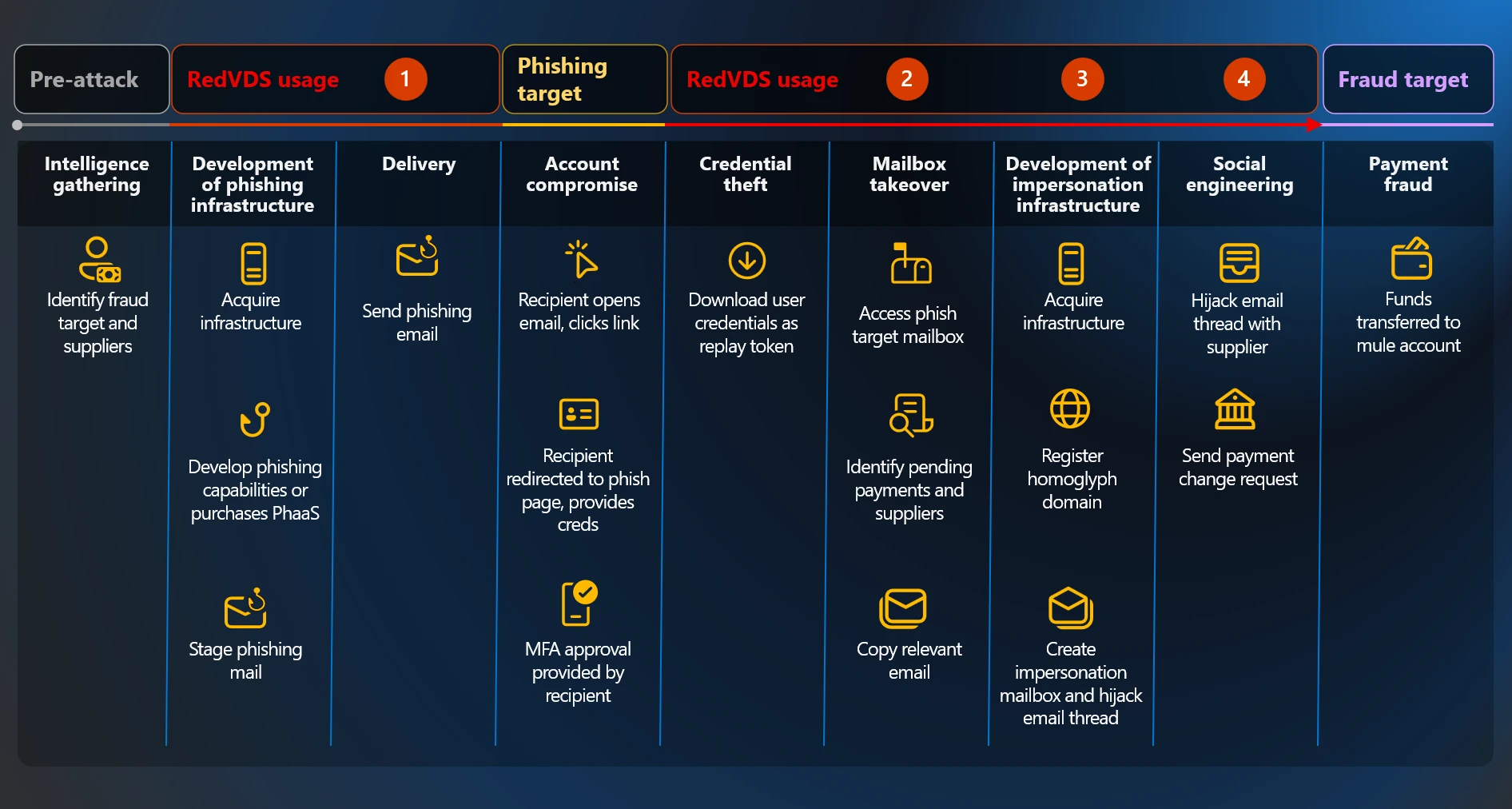
Based on the fingerprint correlation, Microsoft reports:
[ BEC attack chain]
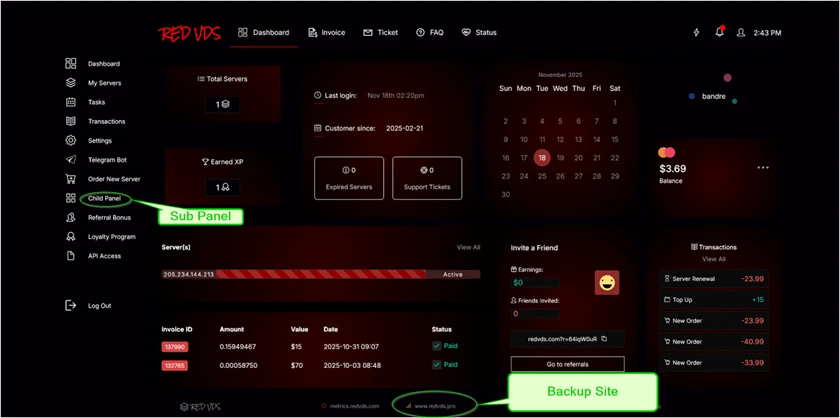
[ RedVDS provisioning interface]
[ Hosting provider/ASN distribution]
Why This Matters
The same fingerprinting technique Microsoft used to attribute RedVDS is used by attackers to profile targets. Every exposed artifact—banners, certificates, DNS records, metadata—becomes reconnaissance data.
For Security Teams
Hunt for infrastructure reuse in your telemetry:
- Look for repeated hostnames across different source IPs in Windows Event logs (4624/4625)
- Check RDP certificate subjects for recurring patterns
- Monitor for consistent JA3/JARM hashes from unrelated IPs
- Pivot on certificate fingerprints using Shodan, Censys, or GreyNoise
For Organizations
Audit your external fingerprint regularly:
- Service banners — Remove or customize version information from HTTP headers, SSH, SMTP
- Certificates — Avoid exposing internal naming in certificate subjects; rotate regularly
- DNS records — Limit public records; avoid predictable subdomain naming (dev, staging, internal)
- Document metadata — Strip author names, internal paths, software versions before publishing
- Job postings — Avoid listing specific tool versions or security products
Analytical Notes
All technical findings originate from Microsoft Threat Intelligence—law enforcement disclosed no
independent methodology. RedVDS operated openly at redvds.com since 2019, indexed by search
engines with "no logs" marketing and Bitcoin-only payments, yet operated for 6+ years before action. The
claims in this analysis are sourced from Microsoft's report.
Reported Indicators
Indicators disclosed by Microsoft related to this case:
| Type | Value | Notes |
|---|---|---|
| Hostname | WIN-BUNS25TD77J |
Claimed fingerprint in RDP certs |
| Domain | redvds[.]com |
Primary site (seized) |
| Domain | redvds[.]pro |
Secondary site (seized) |
| Domain | vdspanel[.]space |
Control panel |
MITRE ATT&CK Mapping
Techniques reportedly used in attacks attributed to this infrastructure:
Timeline
Disruption Actions
| Entity | Action |
|---|---|
| Microsoft DCU | Civil lawsuits filed in US & UK |
| FBI | Criminal investigation (no details disclosed) |
| Europol EC3 | European server seizures |
| German ZIT / Brandenburg Police | Main server seized in Germany |
Conclusion
A single cloned hostname across 7,300+ IPs allowed Microsoft to correlate thousands of attacks to one infrastructure provider. The same fingerprinting technique that enabled this attribution is used by attackers to profile targets.
The lesson: infrastructure leaves fingerprints. Whether you're hunting threats or protecting an organization, understanding what those fingerprints reveal—and minimizing your own exposure—is essential.


