

Incident Overview
On July 1, 2025, the official website of the Departmental Council of Côte-d'Or (cotedor.fr) went offline following a cyberattack. The pro-Russian hacktivist group NoName057(16) took responsibility via its Telegram channel, claiming to have launched a DDoS (Distributed Denial-of-Service) attack.
This wasn’t an isolated case , French regional websites had already been targeted earlier in the year. The outage disrupted access to digital public services for local residents in Burgundy. Though the attack caused no data breach, it highlighted how even local government platforms can become targets in politically charged cyber campaigns.
How the Attack Unfolded
The DDoS attack began in the early morning hours and involved overwhelming the site’s server with malicious traffic ,most likely in the form of repeated HTTP requests from a network of bots or volunteer-operated devices. The sheer volume of these fake requests exhausted server resources, making the site slow or completely inaccessible causing issues.
NoName057(16) posted a Check-Host link as proof that the site was down globally, which is a common tactic they use to showcase their “success.” No data was stolen, and there was no system breach ,this was a disruption-only operation. By the afternoon, mitigation efforts by IT teams were underway, and the site was back online.
This attack was part of a broader campaign against French regional sites and public institutions, consistent with NoName057(16)’s objective of retaliating against countries perceived as supporting Ukraine.
Who Is NoName057(16)?
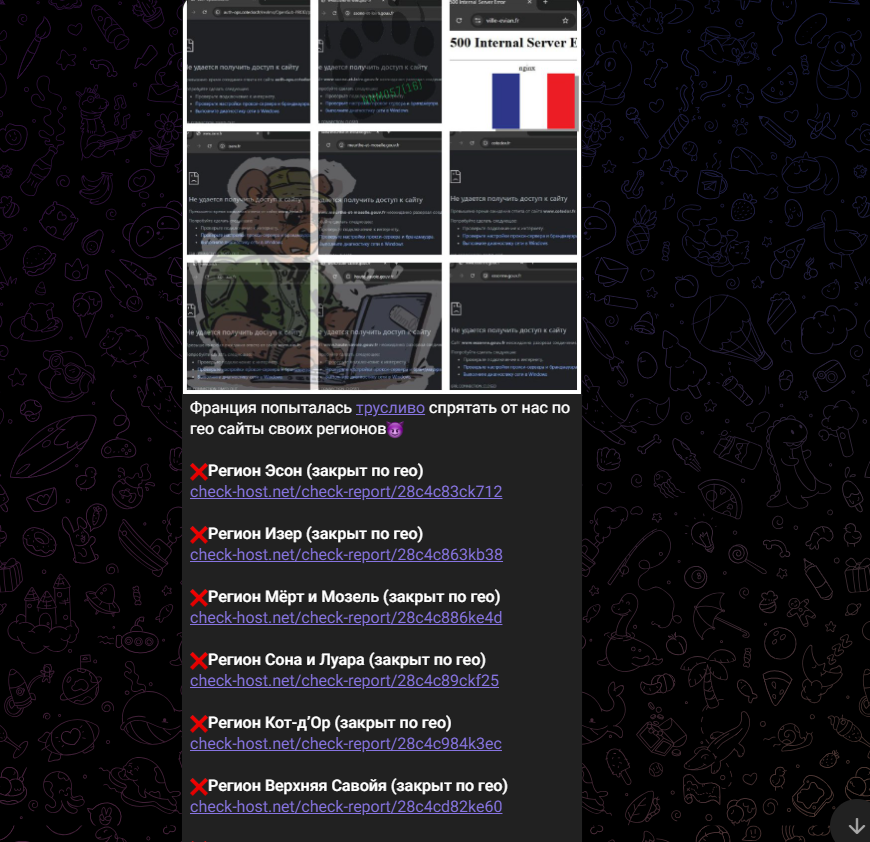
NoName057(16) is a pro-Russian hacktivist group that emerged in 2022 following the onset of the Russia–Ukraine war. Known for using DDoS attacks as their weapon of choice, they target government and institutional websites in NATO-aligned countries, particularly those supporting Ukraine.
They organize, interact and operate openly via Telegram and operate their own DDoS platform called DDosia, which allows volunteers to participate in coordinated cyberattacks. These volunteers are sometimes incentivized with cryptocurrency payments based on the effectiveness of their participation & also depending on their success rate.
NoName’s goal isn’t to breach data—it’s disruption and propaganda. Every takedown is documented, celebrated, and used to further political messaging. France, being a key supporter of Ukraine, has become a frequent target of the group.
A Quick Look at DDoS Attacks
A DDoS attack involves flooding a website with fake traffic so much, in fact, that it can't serve legitimate visitors. Think of it like thousands of people calling a customer service line at once, so real callers can’t get through.
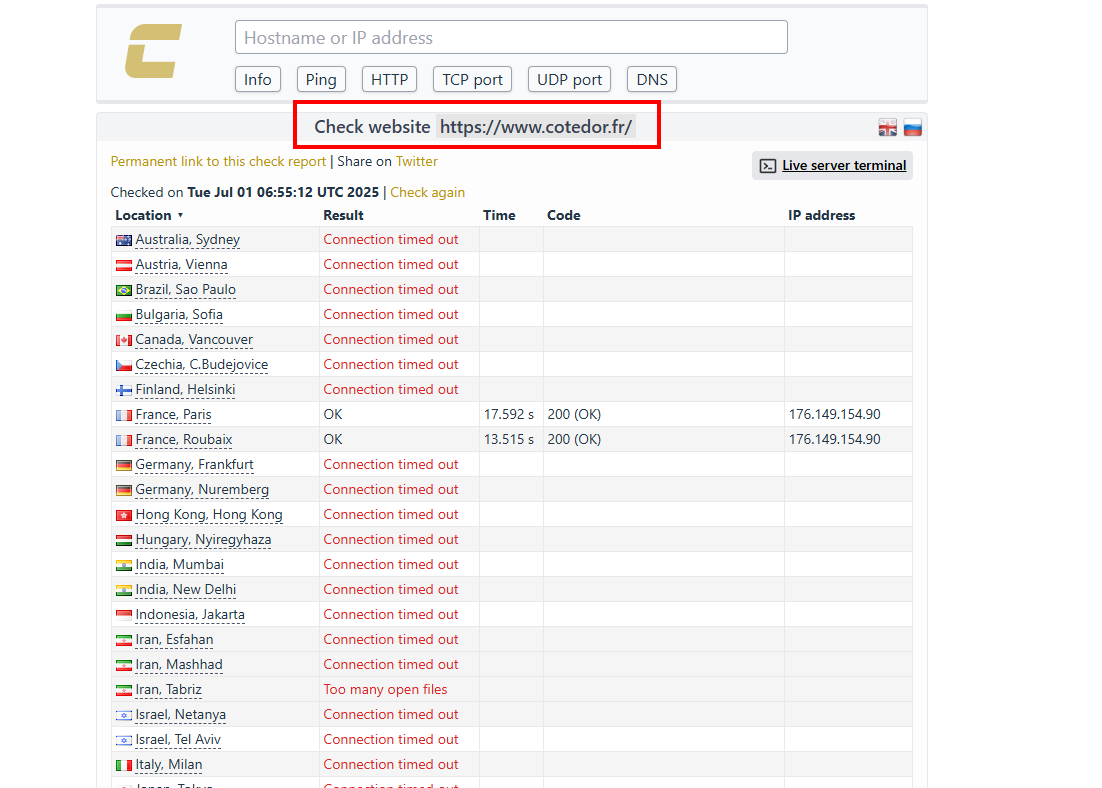
In technical terms, the attackers use a network of bots or compromised devices to generate overwhelming HTTP requests or traffic to a website. In the Côte-d'Or case, the volume and persistence of traffic likely exhausted server resources until the site became unreachable.
These attacks are noisy and disruptive, but not usually destructive. There's no data breach or infiltration—just temporary denial of access. Still, for government websites, even brief outages can erode public trust and interrupt civic functions.
Why France?
France has been one of Ukraine’s strongest backers in the EU, in terms of providing diplomatic support and military aid. That stance has placed it firmly in the sights of pro-Russian hacktivists like NoName057(16) making it a key target.
The July 1 attack fits a pattern observed throughout 2024 and 2025, in which regional and national websites across France such as those of Essonne, Isère, Haute-Savoie, and cities like Évian and Toulouse were hit with similar DDoS campaigns. Many of these were claimed under hashtags like #OpFrance, part of a broader psychological and political cyber campaign.
Orange Cyberdefense and other European threat monitoring agencies have noted that France is among the most frequently targeted countries in NoName’s campaigns, following closely behind Spain and the U.S.
Takeaways and Implications
While the DDoS attack on Côte-d'Or’s website did not result in stolen data or long-term damage, it’s a clear example of how cyber conflict bleeds into everyday life. A regional French government site became collateral in a geopolitical digital war.
This is another reminder that no site is too small to be targeted. Even a department-level website must now consider DDoS protection as a critical part of its cybersecurity posture. Geo-blocking, rate-limiting, cloud-based DDoS protection, and monitoring solutions should be part of the baseline toolkit. It’s a glimpse into the new battlefield ,one where websites can go down not because of technical error, but because of global political tensions.
Final Thoughts
The July 1 attack on the Côte-d'Or Departmental Council is part of a growing trend of politically motivated cyber disruption. While temporary, such attacks are effective tools for groups like NoName057(16) to make a statement and stir anxiety. They reflect a broader shift: cyberattacks are no longer confined to high-profile national institutions - they're reaching into local government and public services.


